
Why a ‘Surgical Robot’ is more than just a ‘Robotic Arm’ and the transition from surgery 2.0 to surgery 3.0
By Yossi Bar, CEO and Founder of LEM Surgical. June 6th, 2026.
Preview In the contemporary realms of spine and orthopedic surgery, the medical community has become accustomed to a very specific, yet restrictive, definition of a ‘surgical robot’. Today, when professionals and hospital administrators discuss hard tissue robotic-assisted surgery, they are almost exclusively referring to a single robotic arm coupled with some form of stationary navigation system. This established paradigm has undoubtedly advanced surgical precision over the last decade, but it is crucial to clarify a fundamental misconception at the very beginning of this discussion: a truly comprehensive surgical robot is much more than just a robotic arm.
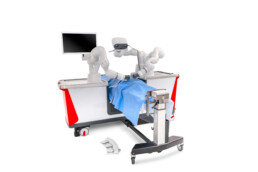
A successful surgical robot, particularly one built upon a humanoid architecture, must be vastly more comprehensive. It must have built into its architecture the robotic arms, which serve as the hands. It must have integrated, articulated vision, which serves as its sight. It must possess an array of internal and external sensors, representing the other vital senses. It must feature sophisticated end-effectors, acting as palms, that can operate multiple distinct tools. Finally, it requires a powerful computational brain capable of coordinating all these simultaneous inputs, learning from the environment, and adapting in real time. The transition from a simple mechanical appendage to a surgical humanoid represents a definitive leap from passive physical assistance to an integrated, intelligent surgical partner that will be a key element as part of the transition towards surgery 3.0 [4, 5].
To explore this paradigm shift, this article is structured into the following chapters:
- Chapter 1: The Bottleneck of Current Architectures: Line of Sight and the Passive Arm
- Chapter 2: Overcoming Limitations: The Merits of Proprioception and Physical AI
- Chapter 3: Defining the Surgical Humanoid: Anatomy of a New Paradigm
- Chapter 4: The Analogy of Capability: The Carpenter and the Neurosurgeon
- Chapter 5: Conclusion
Chapter 1: The Bottleneck of Current Architectures: Line of Sight and the Passive Arm
To understand the necessity of the surgical humanoid, one must examine the limitations of the current standard. A single robotic arm paired with a distant, stationary camera creates a highly restrictive architecture dependent on an unbroken line of sight [1]. This dependency introduces critical vulnerabilities:
- Spatial Intrusions: Distant cameras require bulky bony markers that crowd the delicate surgical site. Moreover, the massive footprint of camera carts and base stations restricts team mobility and complicates sterile field maintenance.
- Workflow and Cognitive Disruptions: Operating room staff or equipment can easily obstruct the camera, halting procedures and causing workflow delays [1]. Additionally, forcing surgeons to constantly look at a distant navigation screen disrupts hand-eye coordination and significantly increases cognitive load [1].
Ultimately, tethering a single arm to distantly located “eyes” results in a heavily dependent and limited surgical assistant.
The solution to this imminent bottleneck requires a complete rethinking of the navigation architecture. Assuming an intelligent robot must possess a sense of sight, this vision needs to be agile and automatically adjustable. Furthermore, the robot must be capable of sustaining operations even when continuous visual feedback is temporarily interrupted.
Chapter 2: Overcoming Limitations: The Merits of Proprioception and Physical AI
The integration of Physical AI and advanced sensory arrays fundamentally changes how the robot interacts with the patient and the surgical environment. Current digital AI excels at processing static datasets or preoperative medical images. Physical AI, however, requires the artificial intelligence to be actively embodied [2, 5]. It transforms the system from a passive observer into an active participant capable of sensing and responding to a dynamic clinical environment in milliseconds.
For both a human surgeon and a humanoid robot, sight remains the primary and most important sense. However, a successful humanoid system is designed to utilize this vision without becoming entirely dependent on it. A critical component enabling this independence is proprioception. Proprioception refers to the robot’s innate awareness of its own kinematic and dynamic state. A properly architected humanoid robot possessing proprioception capabilities knows exactly where its “limbs” are without needing to continuously look at them through an external camera. This internal sense of position and applied force provides a profound advantage over traditional robotic architectures. The human equivalent of this robotic capability is the ability to tie shoelaces even in the dark or without looking at one’s hands.
When a surgical humanoid possesses highly refined proprioception, it mathematically calculates the exact location of its instruments in three-dimensional space based entirely on internal feedback loops. Because of this, the robot can occasionally operate its hands and sustain surgical tasks without a strict 100% dependency on continuous visual tracking. When this proprioceptive awareness is combined with its centralized 3D vision mapping the surgical field, the robot becomes entirely independent of distant, external line-of-sight tracking. The cumbersome stationary navigation cameras, the reliance on easily obstructed navigation markers, and the frequent workflow interruptions due to blocked views are completely eliminated. The robot perceives the environment through its central vision, while simultaneously calculating and feeling its exact spatial orientation through its joints.
Furthermore, this rich sensory integration allows for active, intelligent force feedback. Just as a human surgeon feels the changing physical resistance when drilling through dense cortical bone into softer cancellous bone, a proprioceptive surgical humanoid can detect these variations in tissue density. The Physical AI processes these tactile signals instantaneously, allowing the system to automatically adjust its trajectory and limit its applied force. This ensures a level of safety, tissue preservation, and precision that a rigid, blind robotic arm could never achieve on its own.
Chapter 3: Defining the Surgical Humanoid: Anatomy of a New Paradigm
What, then, defines the characteristics of a true surgical humanoid?
At its core, a surgical humanoid adopts the physical and cognitive frameworks that make human surgeons so remarkably effective, while engineering away human biological and physical limitations.
The first defining characteristic is its structural form: an upper-torso humanoid architecture. It is important to underline that a surgical humanoid does not require legs. Legs are far more than just a functional redundancy; they act as an active disturbance in a non-sterile section, causing:
- Unnecessary mechanical complexity, which consequently drives up costs.
- Occupation of physical space immediately adjacent to the operating table, which is vital for the human surgical team to stand, move, and intervene.
The optimal design is an upper torso that integrates seamlessly over the surgical field without encroaching on the floor space required by the attending staff.
However, a surgical humanoid is much more than simply mounting two robotic arms to a central metallic pillar. True humanoid architecture demands a bi-manual structure with integrated 3D vision positioned centrally between the arms, perfectly mimicking the human visual-motor axis. This central placement of “sight” allows the system to perceive the surgical field exactly where its “hands” are operating. It eliminates the parallax errors and line-of-sight occlusions that plague external camera systems. The comprehensive system encompasses the hands, the central sight, the myriad of internal sensors mimicking human senses, and the sophisticated end-effectors acting as palms.
Chapter 4: The Analogy of Capability: The Carpenter and the Neurosurgeon
To fully appreciate the versatility of this humanoid architecture, one must consider the human body itself. The fundamental physical architecture of a human being is universal. The exact same anatomical structure, bi-manual coordination, and central vision allow one person to be a master carpenter working with wood, and another to be an elite neurosurgeon navigating delicate neural pathways. The defining difference between the carpenter and the neurosurgeon does not lie in their baseline physical architecture. The difference is dictated entirely by the tools they use and the extensive training they undergo.
This exact principle is the foundational cornerstone of the surgical humanoid. To mimic this human versatility, a humanoid robot must possess an “instrument-agnostic” capability. The sophisticated end-effectors, serving as the robot’s palms, must not be locked into holding only proprietary, single-purpose instruments manufactured exclusively by the robot’s developer. Instead, they must be engineered to grasp and seamlessly operate a multitude of standard and specialized surgical tools, just as a human hand can interchangeably wield a scalpel, a variety of screwdrivers, and a high-speed drill.
Equally important is the “training” the robot receives. In the realm of advanced robotics, this training is accelerated significantly with the new tools available today following the emergence of Artificial Intelligence, and more specifically, Physical AI [2, 5]. A surgical humanoid is equipped with a powerful computational brain that processes immense amounts of multimodal data. Through Physical AI, the robot literally learns distinct professions and procedures. The same bi-manual upper torso can be trained to perform complex spinal fusions today and intricate orthopedic joint replacements tomorrow, simply by updating its neural networks and equipping it with the appropriate tools. This profound adaptability stands in stark contrast to today’s single-arm systems, which are typically engineered and rigidly approved for very narrow, specific procedural indications.
Chapter 5: Conclusion
The evolution from isolated robotic arms to comprehensive surgical humanoids is not merely an incremental change in hardware design. It is a definitive paradigm shift in how the medical field must approach automated intervention in hard tissue, spine, and orthopedic surgery. We must move past the limiting misconception that an external optical camera and a single mechanical appendage constitute a true surgical robot.
A surgical humanoid brings the full spectrum of capabilities to the operating room. By adopting an upper-torso, bi-manual architecture with central 3D vision, we optimize the surgical workspace and respect the needs of the human team. By ensuring instrument-agnostic end-effectors and leveraging the power of Physical AI, we create a versatile system capable of continuous learning and procedural adaptation. Finally, by integrating proprioception, we remove the restrictive tether of external line-of-sight tracking.
The result is a highly sophisticated, aware, and capable surgical partner that transcends the limitations of today’s robotic arms, ultimately driving the critical transition from Surgery 2.0 into the advanced era of Surgery 3.0.
References
[1] Lin, Y., et al. “A Practical AR-Based Surgical Navigation System using Optical See-Through Head Mounted Display.” Proceedings of the IEEE International Conference on Bioinformatics and Bioengineering (BIBE), 2022. (Discusses the disruption of hand-eye coordination and the line-of-sight limitations of optical camera tracking systems in crowded operating rooms).
[2] Granados, A., Dasgupta, P., et al. “Frontiers in Science: AI-embodied surgical robots can revolutionize surgery – if regulatory questions addressed.” Frontiers in Science, May 2026. Available at: https://www.frontiersin.org/news/2026/05/07/frontiers-in-science-ai-embodied-surgical-robots-can-revolutionize-surgery-if-regulatory-questions-addressed (Details the emergence of embodied/Physical AI in surgical robotics capable of sensing, adapting, and responding to dynamic clinical environments).
[4] Mirnezami, R., & Ahmed, A. “Surgery 3.0, artificial intelligence and the next-generation surgeon.” British Journal of Surgery, 2018. Available at: https://doi.org/10.1002/bjs.10860 (Defines the evolution from Surgery 1.0 and 2.0 to Surgery 3.0, characterized by the integration of artificial intelligence and advanced robotics).
[5] Park, S. J., et al. “Clinical Desire for an Artificial Intelligence-Based Surgical Assistant System: Electronic Survey-Based Study.” JMIR Medical Informatics, 2020. Available at: https://doi.org/10.2196/17647 (Categorizes surgical AI into virtual and physical AI, highlighting embodied physical AI as the driving force behind the Surgery 3.0 era).
[6] Bar, Y. “Surgery 3.0: The Dawn of Physical AI in the Operating Room.” LEM Surgical Insights, May 2026. (Discusses the foundational framework of Surgery 3.0 and the transition from digital AI to active Physical AI).
[7] Bar, Y. “Beyond Assisted Guidance: The Clinical Value of Autonomous Proprioception in Hard Tissue Interventions.” LEM Surgical Insights, May 2026. (Details the mechanics and clinical advantages of proprioception over traditional line-of-sight optical tracking).